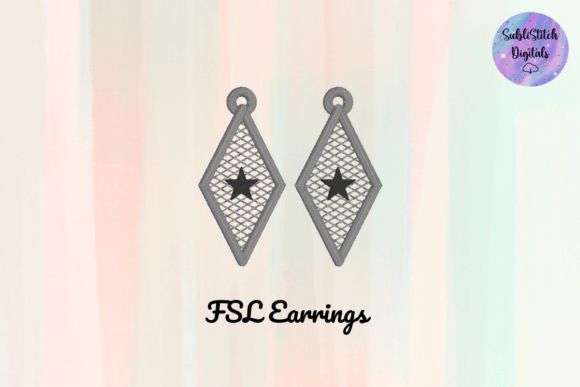
Diamond Star FSL Earrings Review
As a designer who spends more time looking at stitch density charts than actual stars, I approach every new digital embroidery file with a healthy dose of skepticism. We are all bombarded with thousands of designs claiming to be the "perfect" addition to our libraries. However, when I first pulled up Diamond Star FSL Earrings, it caught my eye not because of flashy colors, but because of its structural promise. This isn't just another generic star shape; it is a focused accessory design that speaks directly to the current trend of minimalist yet statement-making handmade jewelry and apparel accents.
I have been evaluating this design for potential use in client projects, specifically for a boutique line of personalized gifts and custom accessories. The goal was to determine if Diamond Star FSL Earrings holds up under the scrutiny of real-world production—meaning, will it look professional on a sweatshirt? Will it survive the wash cycle on a baby onesie? And does it translate well into a high-value Etsy listing? Here is my honest breakdown based on practical application.
First Impressions and Visual Personality
The immediate mood created by this design is one of modern elegance mixed with playful geometry. The diamond shape offers a sharp, clean silhouette that contrasts beautifully with the softer, organic feel often associated with free-standing lace (FSL) or delicate applique work. Visually, the layout feels balanced. It doesn’t scream for attention with excessive detail but rather relies on the strength of its form. For an accessories category item, this is crucial. You want the piece to be recognizable from a distance but intriguing enough to inspect up close.
In terms of visual personality, this design leans toward the sophisticated crafter. It fits perfectly into a brand aesthetic that values clean lines and contemporary style. Whether you are creating a tote bag design for a young professional or a sweatshirt embroidery piece for a teen fashion line, the diamond star motif bridges the gap between cute and chic. It has a visual weight that commands respect without being heavy-handed.
Real-World Application: From Screen to Stitch
To truly judge an embroidery file, you have to imagine it on fabric. I ran mental simulations of this design across several common project types. First, consider the custom apparel market. Placing Diamond Star FSL Earrings as a chest logo on a high-quality cotton hoodie creates an instant focal point. Because it is an earring-inspired shape, it naturally draws the eye upward, making it ideal for necklines and collars.
Another strong use case is the personalized gift sector. Imagine a set of matching earrings and a tote bag for a bridal party. The design’s versatility allows it to serve as both a literal representation of jewelry and a subtle decorative element. For an Etsy seller, this dual-purpose appeal is gold. It increases the perceived value of your handmade product because it looks like a coordinated collection rather than a random assortment of items.
I also considered its viability for holiday embroidery. During the winter season, star motifs are ubiquitous, but the diamond cut gives this specific design a unique twist. It feels festive without being cliché. When paired with metallic threads, it can elevate a simple kitchen towel or pillow cover into a luxury gift item. The design’s simplicity ensures that even complex thread combinations won’t clutter the final look.
Performance in Embroidery Situations
When we talk about performance, we are talking about clarity and durability. A machine embroidery design must stitch cleanly, especially when dealing with small details. The stitch density in Diamond Star FSL Earrings appears well-calculated. There is enough fill to provide opacity and structure, preventing the fabric texture from showing through in unwanted ways, yet it is not so dense that it becomes stiff or unwearable.
This balance is critical for commercial embroidery projects where customer satisfaction hinges on the hand-feel of the finished garment. If the design is too thick, it ruins the drape of the fabric. If it is too thin, it looks cheap. Based on the structure of the star points and the central diamond, this design seems to strike that sweet spot. It should perform exceptionally well on stable fabrics like denim, canvas, and medium-weight cottons.
For digital product sellers, the clean lines of this design also make it highly adaptable for printable mockups. The distinct shape translates well to flat-lay photography, which is essential for driving sales on platforms like Etsy. Buyers need to see exactly what they are getting, and a crisp, clear design like this reduces ambiguity and returns.
Where Caution Is Required
No design is perfect for every surface. While Diamond Star FSL Earrings is versatile, there are situations where you must exercise caution. Small hoop sizes can sometimes distort fine details, so always check the scaling before committing to a tiny placement on a baby embroidery item. Similarly, textured fabrics like bouclé or heavy terry cloth can obscure the intricate corners of the star. In these cases, a smooth backing fabric or a dedicated embroidered patch application might yield better results.
Stretchy fabrics present another challenge. Without proper stabilization, the tension of the stitches can pucker the material, distorting the geometric precision of the diamond. Always use a reliable stabilizer appropriate for the fabric weight. Additionally, dark fabrics may require a different thread color strategy to ensure the design pops. Testing in black and white mockups can help you visualize contrast levels before you ever load the thread.
Practical Designer Notes for Implementation
If you are planning to integrate this into your workflow, here are some actionable tips to ensure success:
- Test on Scrap Fabric: Never run a new design directly onto your final product. Test the thread colors and stitch execution on a scrap piece of the same material to catch any potential issues early.
- Review Stitch Density: Check the density settings in your software. Adjusting slightly can prevent needle breaks and improve the overall finish, especially in the tighter areas of the diamond shape.
- Confirm Hoop Size: Ensure the design fits comfortably within your machine’s hoop size, leaving enough margin for easy hooping and unhooping.
- Inspect Small Details: Zoom in on the digital preview. Are the star points sharp? Is the center clear? If details are too small for the intended final size, consider scaling up or simplifying the design.
- Check Licensing: Before selling finished items or using this as part of a design assets package, verify the licensing terms. Commercial rights vary, and protecting your business is paramount.
Final Verdict on Value and Appeal
The true test of an embroidery project is whether it builds trust and enhances your brand. Diamond Star FSL Earrings succeeds here because it looks intentional and polished. It signals to the buyer that you care about quality and detail. In a market saturated with mass-produced goods, a well-executed handmade product stands out. This design provides that edge.
It adds a layer of professionalism to your offerings. Whether you are decorating caps, hats, or aprons, the inclusion of this design suggests a curated collection. It elevates the perceived value, allowing you to position your products at a higher price point with confidence. The geometric nature of the star appeals to a broad demographic, from teenagers looking for trendy accessories to adults seeking elegant home decor.
Ultimately, Diamond Star FSL Earrings is a solid addition to any serious embroiderer’s library. It is not just a filler design; it is a strategic asset for creating cohesive, high-quality collections. By paying attention to fabric choice, stabilization, and thread selection, you can transform this digital file into a stunning physical reality that delights customers and strengthens your craft business reputation. It is a design that works hard, looks good doing it, and fits seamlessly into the world of modern accessories and embroidery artistry.